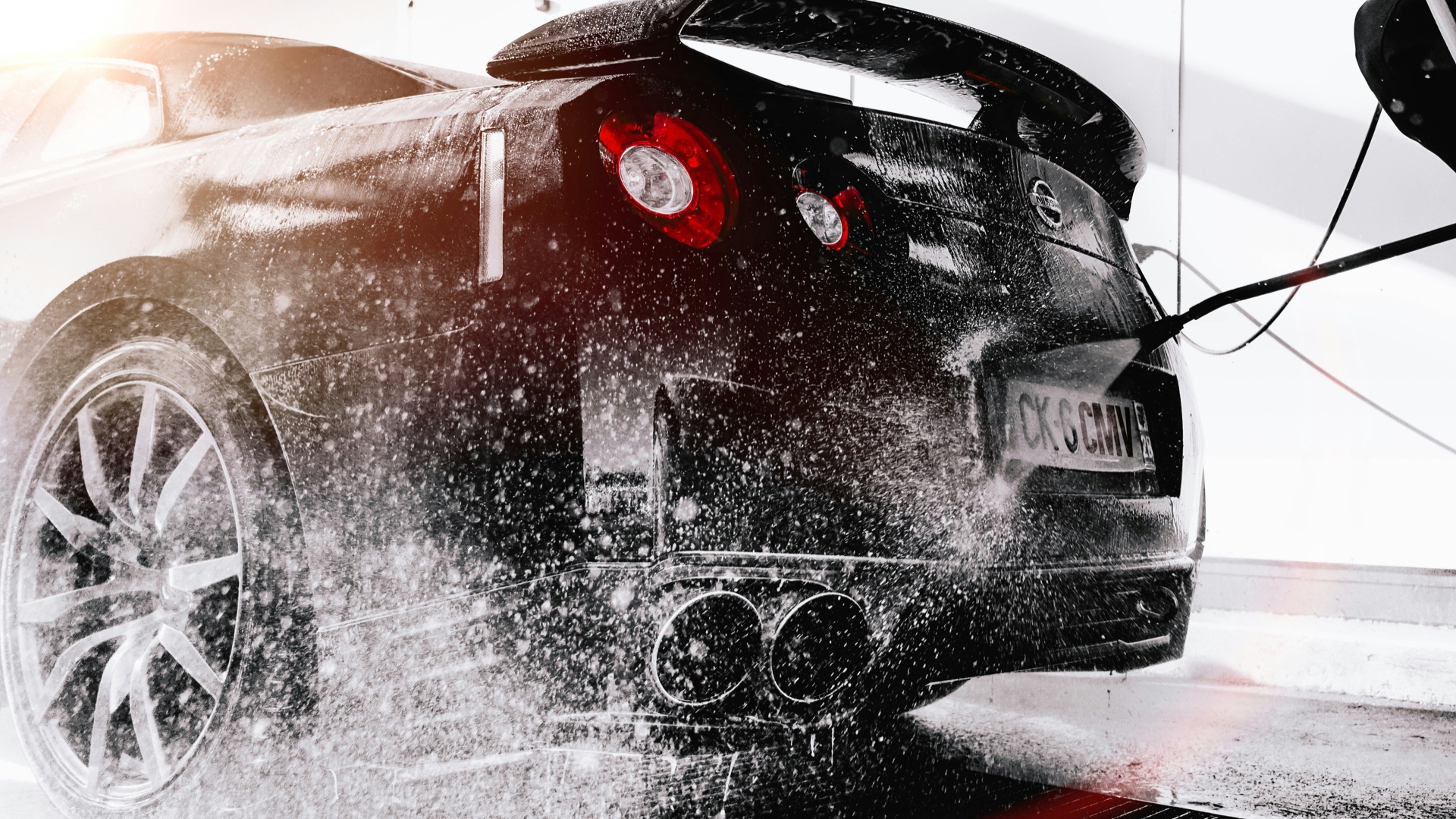
In this article, we compare the different methods of cleaning your vehicle in terms of their impact on long-term paint protection. We look at the pros and cons of hand washing, rinseless washing and various types of car wash. You will also learn how to clean your vehicle optimally without compromising your paint protection.
Why pH Matters for Paint Protection
The pH value of the shampoo plays a crucial role in preserving paint sealants and is the foundation of a paint-safe wash. Both car waxes, which often contain fatty acids, and ceramic coatings can be attacked by aggressive, strongly alkaline cleaners, which impairs their protective effect.
For optimal care, we therefore recommend:
- A pH-neutral shampoo (pH 7-7.5) which, thanks to its balanced formulation, is labelled as suitable for both car waxes and ceramic coatings. For vehicles protected with SiO2-based waxes such as NEOWAX №1 car wax with 50% T1 carnauba and silicon dioxide (SiO2), a slightly acidic shampoo can even be beneficial to support the hydrophobic effect.
Hand Washing: The Gentlest Method
Among enthusiasts, hand washing is considered the safest way to care for the paint and the protection on it. It allows gentle cleaning without aggressive brushes and gives you direct control over the washing process.
The Two-Bucket Method
The two-bucket method is a proven technique for significantly reducing the risk of scratches (swirls) during washing.
Here is how it works:
- Fill one bucket with your pH-neutral shampoo and water.
- Fill a second bucket with clean water only and a grit guard at the bottom.
- Dip your soft wash mitt (microfibre or lambswool) into the shampoo bucket.
- Wash one or two panels of the vehicle from top to bottom.
- Then rinse the wash mitt thoroughly in the second bucket of clean water to remove dirt particles that have become trapped in the mitt.
- Rub the wash mitt against the grit guard to release any remaining dirt.
- Load the mitt with fresh shampoo solution from the first bucket and repeat the process for the next panels.
Important: Wash from top to bottom and start with the least soiled areas. Avoid wiping a dirty wash mitt over areas you have already cleaned, so that you do not transfer dirt particles onto the clean paint surfaces.
Rinseless Wash: The Water-Saving Alternative
A rinseless wash (waterless wash) is a good option for vehicles with light soiling or when no water tap is available. It is particularly suitable for regularly maintained vehicles for cleaning between washes or when they are only lightly soiled.
Here is how to carry out a rinseless wash:
- Fill a bucket with water and a dedicated rinseless wash shampoo at the correct dilution.
- Soak several clean, high-quality microfibre cloths in the wash solution.
- Fold a microfibre cloth into a pad.
- Use it to wipe down one panel of the vehicle without applying heavy pressure.
- Use a clean side of the microfibre cloth for each wipe.
- Immediately dry the cleaned panel with a clean drying towel.
- Use a new, clean microfibre cloth for each panel to avoid scratches from picked-up dirt.
Note: A rinseless wash is not suitable for heavily soiled vehicles. In such cases, you should first use a more thorough washing method. A water-based quick detailer can be used after the rinseless wash as a drying aid and to remove any last water spots.
Car Washes: Fast, but Not Without Risks
An automatic car wash may be tempting when you are in a hurry. However, it also poses risks to your paint protection.
Self-Service Jet Wash Bay: The Acceptable Compromise
A self-service bay offers more control than an automatic car wash and is often a good option for a quick clean.
Keep the following tips in mind:
- Never use the brush on the foam lance, as it is usually contaminated with dirt particles that cause scratches on your paint. Use the high-pressure lance for the pre-wash instead.
- Choose the programme with pH-neutral shampoo (if available) and rinse thoroughly with clean water afterwards.
- The hot wax option in self-service bays has nothing in common with genuine car wax or a paint sealant, is usually difficult to wash off and is therefore not recommended.
- Then dry your vehicle promptly with clean, soft microfibre cloths to avoid water spots. A silicone-free, water-based quick detailer can serve as a drying aid.
Soft-Cloth and Gantry Car Washes: The Last Resort
Automatic car washes pose the following challenges for your paint protection:
- The alkaline pre-wash cleaners in car washes can have a pH value of over 12 and are particularly aggressive towards traditional car waxes and classic Si-O-based coatings.
- The strong surfactants and solvents in machine pre-cleaners can attack almost all organic compounds. However, they often have to be used to loosen stubborn dirt. These cleaners can attack the protective layer of waxes and certain coatings.
- The brushes and cloths in car washes can cause scratches, especially when dirt particles have become trapped in the textiles.
- NEOWAX Fibercoatings are more resistant to high and low pH cleaners thanks to their chemical structure. With coatings from other manufacturers, however, you should always check with the manufacturer.
If you nevertheless have to use a car wash, choose a modern soft-cloth car wash with freshly maintained wash pads and skip aggressive pre-wash options. Choose programmes without hot wax or polish, as these can leave residues, and find out exactly which cleaners are used.
Aftercare Following the Wash
After washing, there are various ways to maintain your paint protection.
Caring for Car Waxes
Car waxes offer outstanding gloss and protection for a limited period.
- Declining hydrophobicity (when water no longer beads up in round droplets) is a sign that the wax is wearing off.
- In this case, the wax can simply be topped up. Wash your car with a mild shampoo and then use a spray quick detailer or a sealant shampoo to restore the hydrophobic effect.
- NEOWAX №1 can be applied 2-4 times a year to ensure optimum gloss and protection. It can even be layered to intensify the protective effect and gloss. However, wait a few hours between layers.
- Avoid alkaline pre-cleaners in car washes, as these can quickly attack waxes.
Caring for Ceramic Coatings
Ceramic coatings offer long-lasting protection, but they also need the right care.
- For regular washing, use pH-neutral shampoos without wax or silicone content.
- Remove aggressive contamination such as bird droppings and insect remains as quickly as possible to avoid staining.
- Avoid abrasive sponges, brushes, polishes and clay bars, as these can damage the ceramic coating.
- Use SiO2 sprays or shampoos to refresh the hydrophobicity and gloss of your coating without damaging it.
- The curing time of the coating after application is crucial for its later performance and durability. Follow the manufacturer's instructions and protect the vehicle from dirt and moisture during this time.
Practical Drying Tips
Drying correctly is crucial to avoiding water spots:
- Use clean, soft microfibre towels with high absorbency. Wash them without fabric softener and dry them without dryer sheets.
- Dry the vehicle promptly after washing, especially on sunny days, to minimise water spots.
- A silicone-free, water-based quick detailer can be used as a drying aid and improves how smoothly the towel glides over the surface.
- For hard-to-reach areas such as gaps and door handles, compressed air or a "dog dryer" can be helpful.
With the right washing method and care, your paint protection will last significantly longer and deliver its full performance – whether it is a high-quality car wax such as NEOWAX №1 or a long-lasting ceramic coating. Regular, gentle cleaning is the foundation for long-lasting gloss and protection.
Prefer a professional?
A certified NEOWAX partner near you
Ceramic coating, graphene coating or car wax – see your guide price in 2 minutes. Free and without obligation.